
•This initiative aims to strengthen awareness of driver drowsiness, one of the most invisible yet dangerous risk factors on the road, and a leading cause of accidents among both private and professional drivers.
•Scientific studies show that driving after fewer than five hours of sleep significantly impairs reaction time, attention, and decision-making, with effects comparable to driving above the legal alcohol limit.
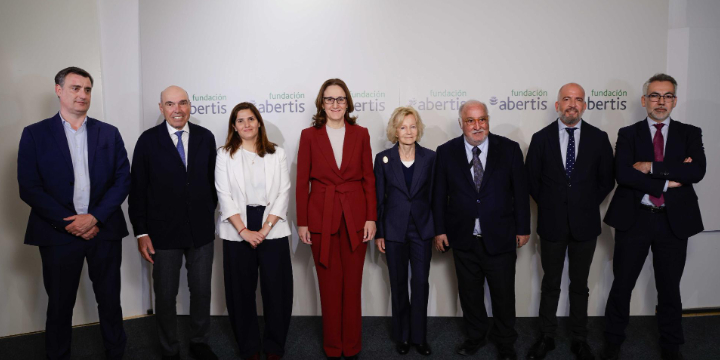
•The campaign was unveiled at an event that brought together institutional representatives and sector experts in a forum for dialogue that discussed measures to prevent driver drowsiness and improve road safety education.
Madrid, 14 April 2026
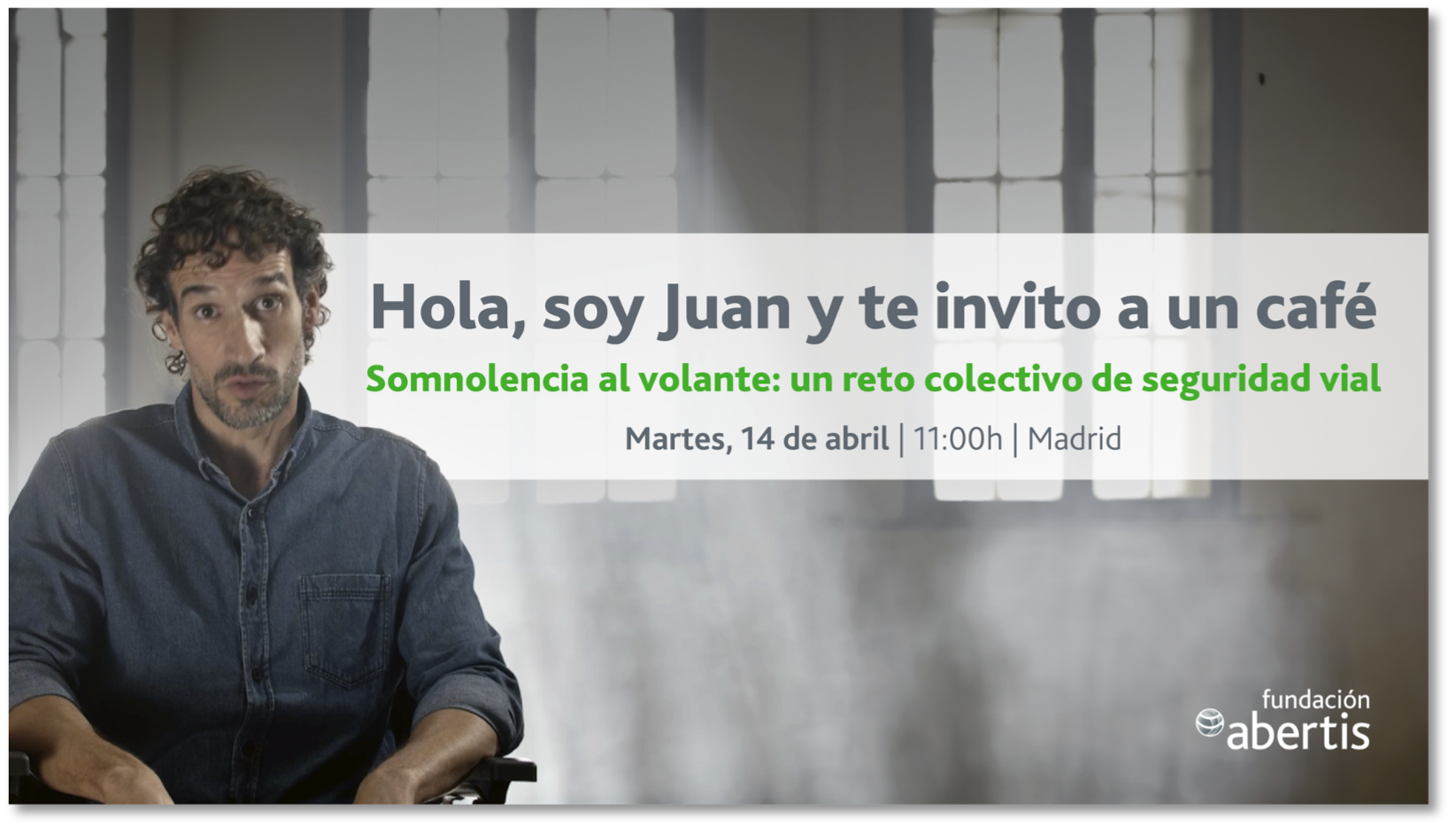
The Abertis Foundation today unveiled its new road safety campaign, “Hi, I’m Juan, let me buy you a coffee,” an initiative designed to raise awareness of the impact of driver drowsiness, one of the leading causes of road accidents.
Inspired by real events, the campaign’s central piece tells a powerful story showing how lack of rest can lead to high-risk driving situations, with irreversible consequences for the protagonist and far-reaching impacts on others, including other road users and motorway maintenance workers.
The campaign forms part of the Foundation’s commitment to promoting more responsible mobility and was carried out in partnership with Autopistas, Abertis’ subsidiary in Spain, along with key sector partners such as the Directorate-General for Traffic (DGT), Repsol, AdSalutem Instituto del Sueño (AdSalutem Sleep Institute), and the Institut Guttmann, bringing together technical knowledge and expertise in prevention, health, and road safety.
“Drowsiness is a silent enemy that can appear on any journey. This Abertis Foundation campaign seeks to remind drivers of the importance of stopping, resting, and listening to their bodies to prevent road accidents,” said Elena Salgado, President of the Abertis Foundation. “For years, the Foundation has been promoting awareness and prevention initiatives to help reduce accident rates. We do so in partnership with institutions and companies across the sector, with whom we will continue working to build a shared road safety culture.”
You can watch the campaign video here.
“Driver drowsiness: a collective road safety challenge”
The campaign was unveiled at an event titled “Driver drowsiness: a collective road safety challenge,” which featured several discussion forums focused on building a culture of road safety. The event brought together leading figures including Pere Navarro, Director-General of Traffic; Antoni Esteve, President of AdSalutem Instituto del Sueño; Daniel Vilanova, Director-General of Autopistas (Abertis Spain); and Carlos Folchi, President of the National Federation of Transport Associations in Spain (FENADISMER). All emphasized the need to strengthen regulation, foster innovation, and advance public-private collaboration to reduce accident rates. The event also gathered institutional representatives, serving as a platform for reflection and dialogue between the public administration and the private sector, including Rocío Báguena, Secretary General for Land Transport, who closed the event. The Secretary General highlighted the Ministry of Transport and Sustainable Mobility’s commitment to the continuous improvement of safety across our road networks, acknowledging that infrastructure alone cannot address all challenges and must be complemented by a broader set of policies, including awareness-raising and shared responsibility initiatives.
For his part, Pere Navarro noted: “In Spain, we live well but sleep poorly. Drowsiness is a public health issue that directly affects road safety and is closely linked to our daily schedules.”
In line with its international vocation, the Abertis Foundation plans to roll out the campaign across the countries where the Group operates, in order to maximise its impact and continue advancing towards safer, more efficient, and more responsible mobility.
A shared commitment to reducing road accidents
According to United Nations data, road traffic accidents cause approximately 1.3 million deaths worldwide each year, with an economic impact close to 3% of GDP in many countries. In this context, driver drowsiness remains one of the least recognised risk factors among the public, despite its direct contribution to numerous road accidents. Through this campaign, the Abertis Foundation reinforces its commitment to civil society and to research in safe mobility, particularly in relation to children and transport professionals.
Lack of rest while driving has effects comparable to alcohol consumption. Scientific studies cited by experts from the AdSalutem Instituto del Sueño show that driving after fewer than five hours of sleep severely impairs reaction time, attention, and decision-making, reaching levels comparable to blood alcohol concentrations of between 0.05 and 0.08—the legal limit in many countries. This impairment significantly increases the risk of serious accidents, particularly run-off-road crashes and rear-end collisions, confirming that driving without adequate rest can be just as dangerous as driving under the influence of alcohol.
About the Abertis Foundation
The Abertis Foundation was founded in 1999 as a non-profit entity, with the mission of contributing to the sustainable development of the regions and countries where the Abertis Group operates, such as Spain, France, Puerto Rico, Chile, Argentina, Brazil or Mexico.
The Abertis Foundation engages in actions designed to improve road safety with the aim of reducing accident rates. These actions focus on road safety education for children, raising awareness among young people and prevention in the case of older drivers. The Foundation also engages in initiatives across education, sustainability, and environmental protection.
22 September 2026
• The Group, together with its Foundation, has opened applications for the Safe Road Operations Challenge, a new open innovation call aimed at technology startups and SMEs from around the world.
• According to the Spanish Directorate-General for Traffic's National Registry of Traffic Accident Victims, 154 accidents related to road maintenance and conservation work were recorded on Spanish roads in 2025, with speed being the main risk factor.
• The challenge addresses a risk common to road operations worldwide: the direct interaction between road workers, live traffic and changing operating conditions.
• The winning proposal will receive a €40,000 ...
15 June 2026
• This is one of the main findings of a study conducted by Universidad Politécnica de Madrid (UPM) in collaboration with the TRANSyT Transport Research Centre, and promoted by the Abertis Foundation as part of its international Chairs programme, analysing mobility habits, infrastructure assessments and future expectations.
• 77% of users believe toll roads have better pavement conditions than non-toll roads, and 67% say they feel safer driving on them.
• 85% call for real-time information on accidents and roadworks to be available directly in vehicles, while 75% support expanding barrier-free payment systems.
• 74% say they would use motorways more if they had access to a free electronic payment device, and seven out of ten already use mobile apps to plan their journeys.